
Midwifery Program Overview
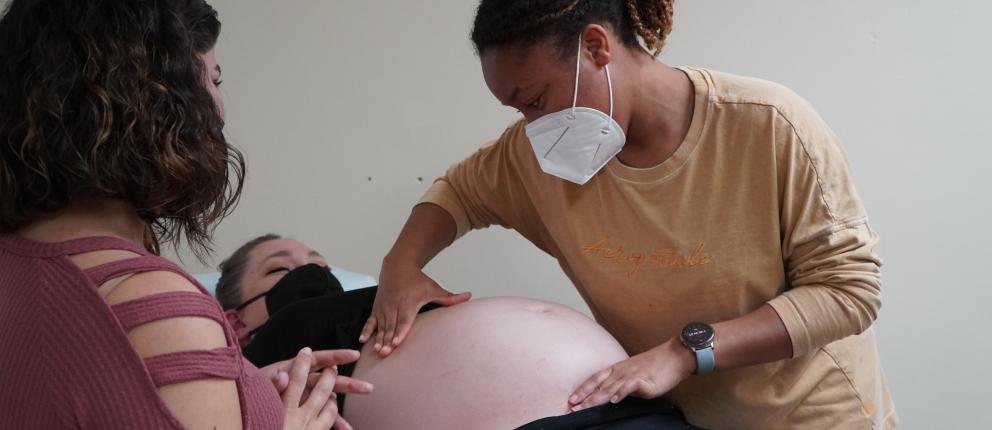
Through Bastyr’s midwifery program, you will learn to be a guide for families in the birthing process. You will train in all aspects of midwifery care, from preconception through pregnancy, labor, birth, and the postpartum period for parents and newborns.
Upon graduation, you’ll be prepared to serve families within your community, ensuring that they look back on their birth experience feeling empowered and respected. You will learn how to care for clients with normal, low-risk pregnancies, labors, births and postpartum periods, as well as normal newborn care.
Learn alongside world-class faculty in the classroom and at clinical preceptor sites. In addition to learning how to provide evidence-based care, they'll guide you in understanding and addressing racism in health care, as well as learning the deep history of the midwifery profession, health policy, legal and ethical frameworks, and how to build a midwifery practice.
*This program is not eligible for international students due to low residency schedule design.
MSM (Master of Science in Midwifery) & eligible to take the board exam to become a CPM. May be eligible for licensure (varies state by state)
3 years (11 quarters) hybrid program (on campus once/month, completion of two years of experience in preceptorships)
Master of Science in Midwifery Highlights
Accredited by the Midwifery Education Accreditation Council and the Northwest Commission on College and Universities.
Social Justice Lens
Direct-Entry Midwifery (no nursing required)
Becoming a Midwife: Midwifery Program Outcomes
Upon completion of Basytr’s Master’s in Midwifery, students will be prepared to:
- Demonstrate the ability to autonomously provide care to clients with normal, low-risk pregnancies, labors, births, and postpartum periods, as well as normal newborn care, in a variety of settings with a primary focus in home and birth center locations; and provide this care in alignment with the Midwives Model of Care™ that promotes birth as a healthy and normal physiologic process
- Assess, diagnose, and appropriately manage common complications in the antepartum, intrapartum, and postpartum periods
- Recognize complications that require consultation, referral, or transfer of care to other providers within the healthcare system, and collaborate effectively for positive client outcomes
- Act as advocates and agents for racial and cultural equity by demonstrating the integration of the principles of reproductive justice
- Communicate with clients in a way that validates the client’s knowledge and experience while encouraging personal responsibility in shared decision-making and informed choice
- Exercise information literacy skills through research activities, policy development, involvement in political processes, and the promotion of midwifery through state, provincial, and national professional organizations
- Demonstrate professional behaviors related to client confidentiality, collegial courtesy, self-reflection, integrity, and ethical interactions
Midwifery Degree Program Details
The curriculum tables that follow list the tentative schedule of courses each quarter.
Fall
Orientation
MW3101 Midwifery Care 1: Introduction to Midwifery (3 credits)
MW3104 Introduction to Epidemiology for Midwives (3 credits)
MW3302 Midwifery Care Health Assessment (4 credits)
MW3311 Perinatal Nutrition 1: Pre-Conception and Prenatal (2 credits)
MW4108 Professional Issues Seminar: Power and Privilege in Midwifery (1.5 credits)
MW4305 Gynecology (3.5 credits)
Winter
MW4100 Genetics and Embryology (2 credits)
MW4302 Midwifery Care 2: Pregnancy and Prenatal Care (4 credits)
MW4310 Pharmacology and Treatments (1.5 credits)
MW4313 Counseling for the Childbearing Year 1 (1 credit)
MW4315 Introduction to CAM Use in Midwifery (2 credits)
MW4319 Clinical Skills 1 (1 credit)
MW5101 Master’s Project 1/Botanical Medicine for Midwifery Care: Choosing a Track
(0.5 credits)
Spring
MW4107 Professional Issues Seminar: Social Difference and Implications in Midwifery Practice (2 credits)
MW4303 Midwifery Care 3: Advanced Pregnancy and Prenatal Care (4 credits)
MW4314 Counseling for the Childbearing Year 2 (1 credit)
MW4322 Clinical Skills 2 (1 credit)
MW4331 Clinical Seminar 1 (1 credit)
MW4810 Midwifery Practicum (variable to a maximum of 8.5 credits)
MW5106 Survey of Research Methods (2 credits)
Summer
MW4810 Midwifery Practicum (variable to a maximum of 8.5 credits)
MW4810: In this quarter, standard registration is (6 credits)
MSMW YEAR II - Master's Project Track
Fall
MW4102 Professional Issues Seminar: Midwifery History, Politics and Activism (2 credits)
MW4332 Clinical Seminar 2 (1 credit)
MW5110 Master’s Project 2 (1.5 credits)
MW5304 Midwifery Care 4: Labor and Birth (6 credits)
MW5315 Counseling for the Childbearing Year 3 (1.5 credits)
MW5810 Midwifery Practicum (variable to a maximum of 7.5)
MW4324 Clinical Skills 3 (1 credit)
MW5810: In this quarter, standard registration is 4.5 credits
Winter
MW4307 Breastfeeding and Lactation Education (2 credits)
MW4333 Clinical Seminar 3 (1 credits)
MW5111 Master’s Project 3 (2 credits)
MW5114 Professional Issues Seminar: Health Care Systems and Health Policy (2 credits)
MW5308 Midwifery Care 5: Postpartum and Newborn Care (5 credits)
MW5316 Counseling for the Childbearing Year 4: Postpartum (1.5 credits)
MW5324 Clinical Skills 4 (0.5 credits)
MW5810 Midwifery Practicum (variable to a maximum of 7.5)
MW5810: In this quarter standard registration is (3 credits)
Spring
MW4105 Professional Issues Seminar: Midwifery Legal, Ethical and Professional Framework (2 credits)
MW5112 Master’s Project 4 (2 credits)
MW5309 Midwifery Care 6: Challenges in Practice (4 credits)
MW5326 Clinical Skills 5 (1 credit)
MW5334 Clinical Seminar 4 (1 credit)
MW6810 Midwifery Practicum (variable to a maximum of 33.5)
MW6810: In this quarter standard registration is (4 credits)
Summer
MW6110 Master’s Project 5 (2 credits)
MW6810 Midwifery Practicum (variable to a maximum of 33.5)
YEAR III - - Master's Project Track
Fall
MW6111 Master’s Project 6 (2 credits)
MW6307 Midwifery Care 7: Synthesis and Application (2 credits)
MW6335 Clinical Seminar 5 (1 credit)
MW6810 Midwifery Practicum (variable to a maximum of 33.5)
Winter
MW6112 Master’s Project 7 (1 credit)
MW6336 Clinical Seminar 6 (1 credit)
MW6810 Midwifery Practicum (variable to a maximum of 33.5 credits)
Spring
MW6115 Professional Issues Seminar: The Business of Midwifery (2.5 credits)
MW6337 Clinical Seminar 7 (1 credit)
MW6810 Midwifery Practicum (variable to a maximum of 33.5 credits)
MW6810: In this quarter standard registration is 8.5 credits
Degree Requirements - Botanical Medicine in Midwifery Care
The curriculum tables that follow list the tentative schedule of courses each quarter.
MSMW YEAR I - Botanical Medicine in Midwifery Care Track
MSMW Year I
Fall
Orientation
MW3101 Midwifery Care 1: Introduction to Midwifery (3 credits)
MW3104 Introduction to Epidemiology for Midwives (3 credits)
MW3302 Midwifery Care Health Assessment (4 credits)
MW3311 Perinatal Nutrition 1: Pre-Conception and Prenatal (2 credits)
MW4108 Professional Issues Seminar: Power and Privilege in Midwifery (1.5 credits)
MW4305 Gynecology (3.5 credits)
Winter
MW4100 Genetics and Embryology (2 credits)
MW4302 Midwifery Care 2: Pregnancy and Prenatal Care (4 credits)
MW4310 Pharmacology and Treatments (1.5 credits)
MW4313 Counseling for the Childbearing Year 1 (1 credit)
MW4315 Introduction to CAM Use in Midwifery (2 credits)
MW4319 Clinical Skills 1 (1 credit)
MW5101 Master’s Project 1/Botanical Medicine for Midwifery Care: Choosing a Track (0.5 credits)
Spring
MW4107 Professional Issues Seminar: Social Difference and Implications in Midwifery Practice (2 credits)
MW4303 Midwifery Care 3: Advanced Pregnancy and Prenatal Care (4 credits)
MW4314 Counseling for the Childbearing Year 2 (1 credit)
MW4322 Clinical Skills 2 (1 credit)
MW4331 Clinical Seminar 1 (1 credit)
MW4810 Midwifery Practicum (variable to a maximum of 8.5 credits)
MW5106 Survey of Research Methods (2 credits)
Summer
MW4810 Midwifery Practicum (variable to a maximum of 8.5 credits)
MSMW YEAR II - Botanical Medicine in Midwifery Care Track
Fall
MW4102 Professional Issues Seminar: Midwifery History, Politics and Activism (2 credits)
MW4324 Clinical Skills 3 (1 credit)
MW4332 Clinical Seminar 2 (1 credit)
MW5121 Botanicals 1- Foundations (2 credits)
MW5304 Midwifery Care 4: Labor and Birth (6 credits)
MW5315 Counseling for the Childbearing Year 3 (1.5 credits)
MW5810 Midwifery Practicum (variable to a maximum of 7.5)
Winter
MW4307 Breastfeeding and Lactation Education (2 credits)
MW4333 Clinical Seminar 3 (1 credit)
MW5114 Professional Issues Seminar: Health Care Systems and Health Policy (2 credits)
MW5122 Botanicals 2: Postpartum (2 credits)
MW5308 Midwifery Care 5: Postpartum and Newborn Care (5 credits)
MW5316 Counseling for the Childbearing Year 4: Postpartum (1.5 credits)
MW5324 Clinical Skills 4 (0.5 credits)
MW5810 Midwifery Practicum (variable to a maximum of 7.5 credits)
Spring
MW4105 Professional Issues Seminar: Midwifery Legal, Ethical and Professional Framework (2 credits)
MW5123 Botanicals 3: Pregnancy (2 credits)
MW5309 Midwifery Care 6: Challenges in Practice (4 credits)
MW5326 Clinical Skills 5 (1 credit)
MW5334 Clinical Seminar 4 (1 credit)
MW6810 Midwifery Practicum (variable to a maximum of 33.5 credits)
MW6810: In this quarter, standard registration is (4 credits)
Summer
MW6810 Midwifery Practicum (variable to a maximum of 33.5 credits)
YEAR III - Botanical Medicine in Midwifery Track
Fall
MW5124 Botanicals 4: Labor (1 credit)
MW6307 Midwifery Care 7: Synthesis and Application (2 credits)
MW6335 Clinical Seminar 5 (1 credit)
MW6810 Midwifery Practicum (variable to a maximum of 33.5 credits)
Winter
MW5125 Botanicals 5: Holistic Gynecologic Health (2 credits)
MW6336 Clinical Seminar 6 (1 credits)
MW6810 Midwifery Practicum (variable to a maximum of 33.5)
Spring
MW5126 Botanicals 6: Project (1.5 credits)
MW6115 Professional Issues Seminar: The Business of Midwifery (2.5 credits)
MW6337 Clinical Seminar 7 (1 credit)
MW6810 Midwifery Practicum (variable to a maximum of 33.5 credits)
Review complete course descriptions in the catalog.
-
Minimum cumulative GPA of 2.75 required to be considered for admission.
-
A grade of C or better is also required in all basic proficiency courses.
-
Students may apply to the program while completing prerequisite coursework, but must have a plan for completing prerequisites before the start of the program in the fall.
For Applicants With a Bachelor’s Degree in Any Field*
-
General Psychology - 3 quarter credits
-
Introductory Nutrition - 4 quarter credits
-
General Chemistry (allied-health-major level with lab) - 4 quarter credits
-
Microbiology - 4 quarter credits
-
Anatomy and Physiology series - 8 quarter credits
-
College Algebra or Statistics - 4 quarter credits
*From a regionally accredited college/university
For Applicants Without a Bachelor’s Degree
Basic Science and Proficiency Prerequisites
- General Psychology - 3 quarter credits
- Introductory Nutrition - 3 quarter credits
- General Chemistry (allied-health-major level with lab) - 4 quarter credits
- Microbiology - 4 quarter credits
- Anatomy and Physiology Series - 8 quarter credits
- College Algebra or Precalculus or Statistics - 4 quarter credits
General Education Requirements
- English Literature or Composition - 9 quarter credits
- Public Speaking - 3 quarter credits
- Social Sciences - 15 quarter credits
- Arts and Humanities - 15 quarter credits
- Natural Sciences - 4 quarter credits
- Electives - 17 quarter credits*
*The number of elective credits may vary depending on the exact number of quarter credits earned in the other prerequisite categories. Total prerequisite credits must equal at least 90 quarter credits.
* The Simkin Center at Bastyr University offers Childbirth Educator Training and Birth Doula Training. Learn more here.
Bastyr accepts graduate and undergraduate transfer credits earned at accredited colleges and universities. Learn what you need to make this process go smoothly.
For more information on loans and scholarships, visit financial aid.
Some available job opportunities in maternal health are as follows:
- Certified Professional Midwife (CPM)
- Licensed Midwife
- Registered Midwife
- Owning a private practice focusing on birth center and/or home births
- Developing or working in a community birth center
- Participating as part of an integrated maternity care team
- Working internationally to teach and provide care
- Serving as a national policy advocate

Student Testimonials
With both traditional and evidence-based learning, this [program] prepared me to give excellent care upon graduation and licensure. I feel absolutely prepared to go into practice with this education. I have cultivated lifelong friends and a network of fellow midwives who support me as I support them in this difficult and captivating career path.


Transform Healthcare for Birthing People
At Bastyr, we believe that birthing people and babies deserve the best healthcare.
Access our guide to explore some of the biggest challenges birthing people face today and how midwives and maternal-child health advocates, like those who graduate from Bastyr, can help.


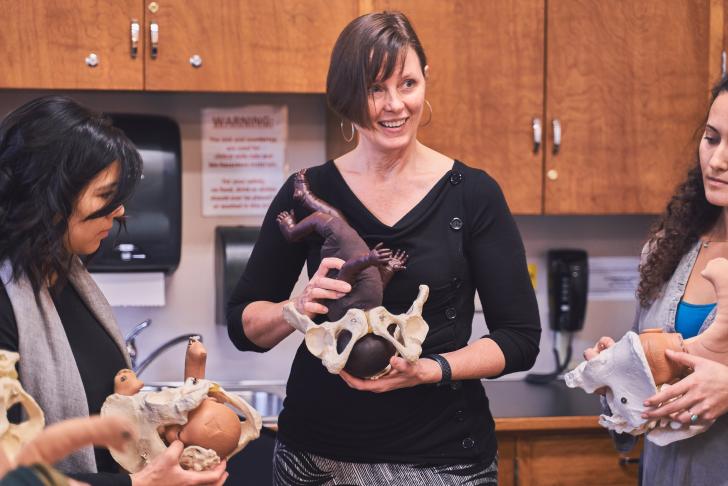


Kristin Effland
LM, CPM, MA
Prior to working at Bastyr University, Kristin worked with the Wenatchee Midwife Service as well as working as a midwife at Gentle Hands Midwifery in Bellingham, WA. She trained in Seattle,…